

Rebecca Logan
Rebecca Logan
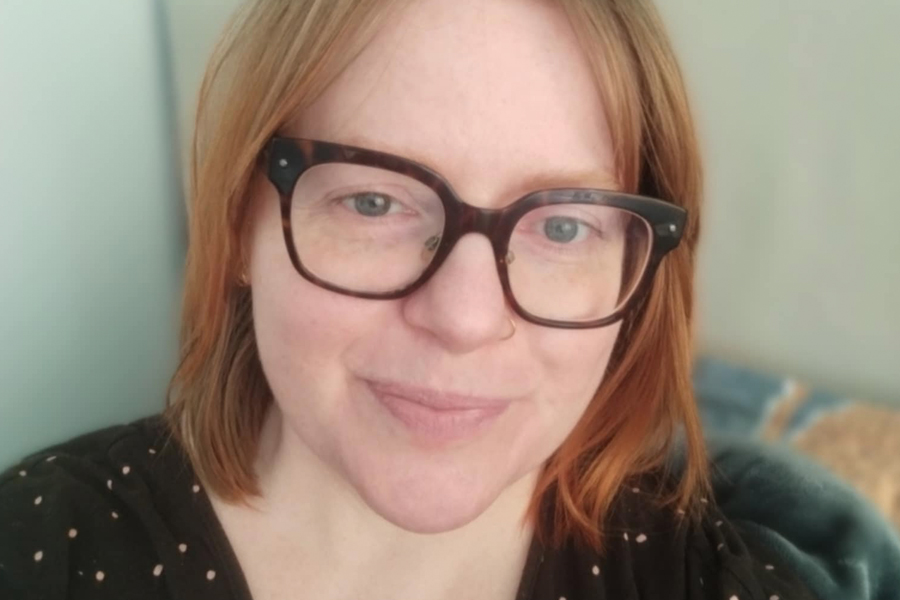
Rebecca Logan's Long Covid Journey from the Frontlines to Advocacy
As countries around the world began locking down in March 2020, Rebecca Logan from Dundonald was one of thousands of healthcare staff who stepped up and took the frontlines of the Covid-19 pandemic.
Then aged 39, Rebecca, a mother of two girls, was working as an A&E nurse in Ulster Hospital, and had only recently completed a fitness instructor course to marry her two passions.
"I was working two jobs seven days a week, a busy mum, and I thought that if I got Covid I would be fine because I had no underlying health conditions,” she said.
However, just a few weeks into the pandemic Rebecca began feeling unlike her usual self.
“I remember teaching a fitness class on the Saturday on Zoom and I completely forgot the routine that I could do in my sleep. “I felt weird, I couldn’t put a finger on it.”
Displaying no typical Covid-19 symptoms, she went to work the next day only to find herself becoming increasingly delirious and dizzy.
On Monday, she lost her sense of taste and smell, and by Tuesday 7 April, a positive test confirmed she had contracted Covid.
While initially she felt sick with flu-like symptoms, by day 10 she was rushed to the very same A&E where she worked after struggling with breathlessness.
“It was really scary,” she explained. I remember saying goodbye to the girls at home but didn’t know if I would be coming back. I'll never forget my colleagues were coming by the car and I had just opened the window [a little bit] but the fear in their eyes when they saw me, I was like: ‘Oh my god, this is so scary.”
Rebecca was later sent home to recover, but five weeks on from when she first contracted the virus, she was still experiencing fatigue and breathlessness.
“If I’d known that I could potentially end up like this from Covid, I never would have worked in it,” she said. Everyone stepped up and that's what you did so it’s only now, over four years later, I’m so unwell and debilitated that if I ever had the choice again, I wouldn’t have done it.”
Rebecca tried her best to return to normality on advice of her then-GP and Covid support workers, but while her body recovered in a small way physically over the months, cognitively her health was getting worse.
It was clear, around eight months after her initial positive test, she was struggling with the effects of Long Covid, and began grieving for her former life after giving up both her nursing and budding fitness careers.
She said: “I felt like I was at a stage in my life where I could choose. “I thought ‘I’m fed up pleasing other people, I’m going to do what I want’, so I did fitness and nursing. It was just like a kick in the stomach when that happened because I was so happy.”
Rebecca said she felt like her family and social life have been “stripped away” because of her condition.
“I was the one who organised things - I was the party girl,” she said. I was the one who loved the craic and going out and dancing. [Now], it just feels like you are forgotten.
“I’ve lost my sense of purpose, it makes me angry. It makes me sad.”
Now, over four years later at the age of 43, Rebecca said she is in a “living hell and nuisance existence” because of what the virus has done to her body.
“You never feel well, I never wake up feeling well or normal. Your brain just feels like it’s not working, like it hurts to think, it hurts to try and work things out. The body pain is just constant…laying down is the only time I feel most semi-comfortable. You don’t even escape it in sleep because the pain wakens you, or it feels like I have poison in my blood. You just can’t live. I can’t live the life I had because of it.”
On good days, Rebecca can manage three hours out of bed before needing to rest again, but even spontaneous trips out, or tasks as simple as washing her hair have become taxing, draining and need to become pre-planned to conserve her energy.
At her worst, she will spend hours laying on the sofa before making the journey back to bed.
Explaining this feeling to friends and colleagues became a “frustrating and exhausting” task, which left her feeling abandoned by her loved ones.
People just disappear because they either don’t know how to deal with it, or don’t want to have to deal with it,” she added. It feels like a constant battle.”
Rebecca has spent the last four years feeling dismissed by medical professionals, loved ones and politicians. She said more awareness and education of the conditions she has developed would go a long way to shifting public attitudes.
You see things about strokes, you see things about heart attacks, so why can there not be a thing about post-viral illness? Anyone is susceptible to it, it’s not just Covid.”
Criticising political inaction towards supporting sufferers of Long Covid, Rebecca said there needs to be a “want to change” by providing more services and financial support for those with debilitating post-virus illnesses.
They need to listen to the people who are suffering and use their experiences to shape services, research and treatments that are appropriate.
It’s bottom of their lists. It always has been and it seems to be the case that it’s going to be that way.
I would give anything to work even for an hour in the jobs that I did. I miss caring for people. I was a good nurse, I know I was and I loved it, and I just miss it so much.”
Rebecca's story is a stark reminder of the long-lasting impact Covid-19 can have on individuals and the urgent need for better understanding and support for those suffering from Long Covid and other post-viral conditions.
2023

 On Facebook
 On X
On X On Instagram


