

What is Myalgic Encephalomyelitis/Chronic Fatigue Syndrome (ME/CFS)?
What Causes ME/CFS?
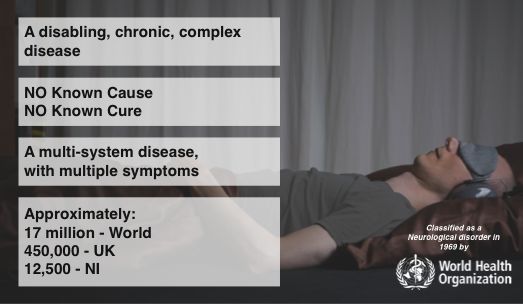
The cause is unknown, evidence indicates that there are likely to be a number of factors involved, and the illness may be prompted by an infection, virus, or some other triggering event.
ME/CFS can severely impact upon the person’s ability to have a normal life. Many struggle with symptoms for years before receiving a diagnosis.
Who Does ME/CFS Affect?
- Female to male 4:1 (similar to MS) Children and adults
- Approx. 80% triggered by a viral infection
- 40% have 1st degree relative with autoimmune condition
- Prognosis unknown (Approx. 5% recover)
How is ME/CFS Diagnosed
There is no specific laboratory test, a diagnosis is based on a person’s medical history and symptoms, and by ruling out other diseases with similar symptoms.
A diagnosis of ME/CFS is made by a doctor such as a GP or hospital consultant, ideally using the NICE Guideline (NG206) 2021 https://www.nice.org.uk/guidance/ng206 that requires the presence of 4 core symptoms:
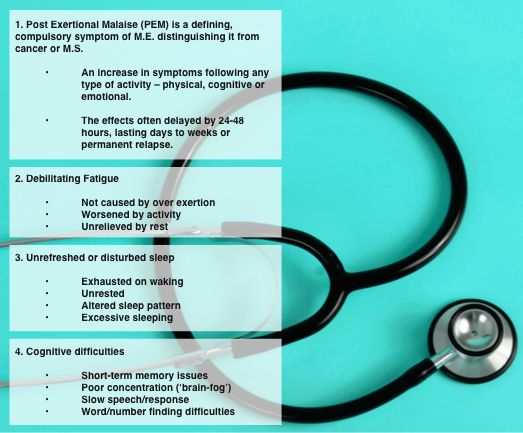
Suspect ME/CFS in a person if the following can be applied
- ALL 4 core symptoms have been present for a minimum of 6 weeks in adults, or 4 weeks in children and young people.
- Significant reduction from pre-illness abilities to work, study, socialise, do other personal activities.
- No other condition can explain symptoms.
- A diagnosis of ME/CFS can be made in a child, young person or adult who has symptoms that have persisted for 3 months and are not explained by another condition.
Other common symptoms of ME/CFS
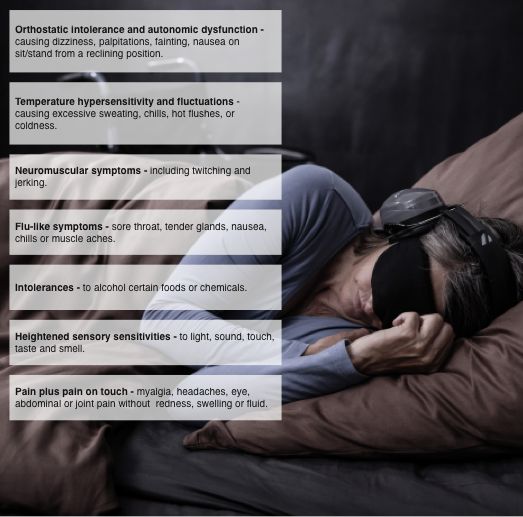
Individuals experience different combinations and severity of these symptoms, which ultimately affects their ability to carry out every day personal, social, occupational, educational, physical, mental and emotional tasks and activities
Severity Of ME/CFS
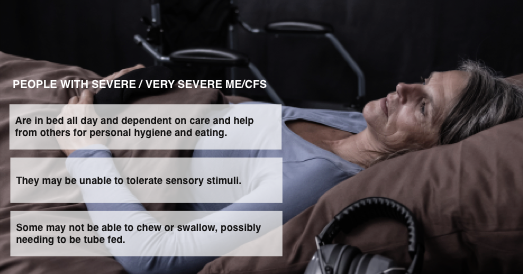
Mild, Moderate, Severe, 25% Severe / Very Severe
Individuals experience different combinations and severity of these symptoms, which ultimately affects their ability to carry out every day personal, social, occupational, educational, physical, mental and emotional tasks and activities.
People with M.E., have a lower quality of life compared to people with: M.S., lung & colon cancer, depression, heart & chronic kidney disease, and advanced HIV.
Treatment for ME/CFS
Currently, there is no effective drug treatment for ME/CFS, and rarely is a full recovery achieved.
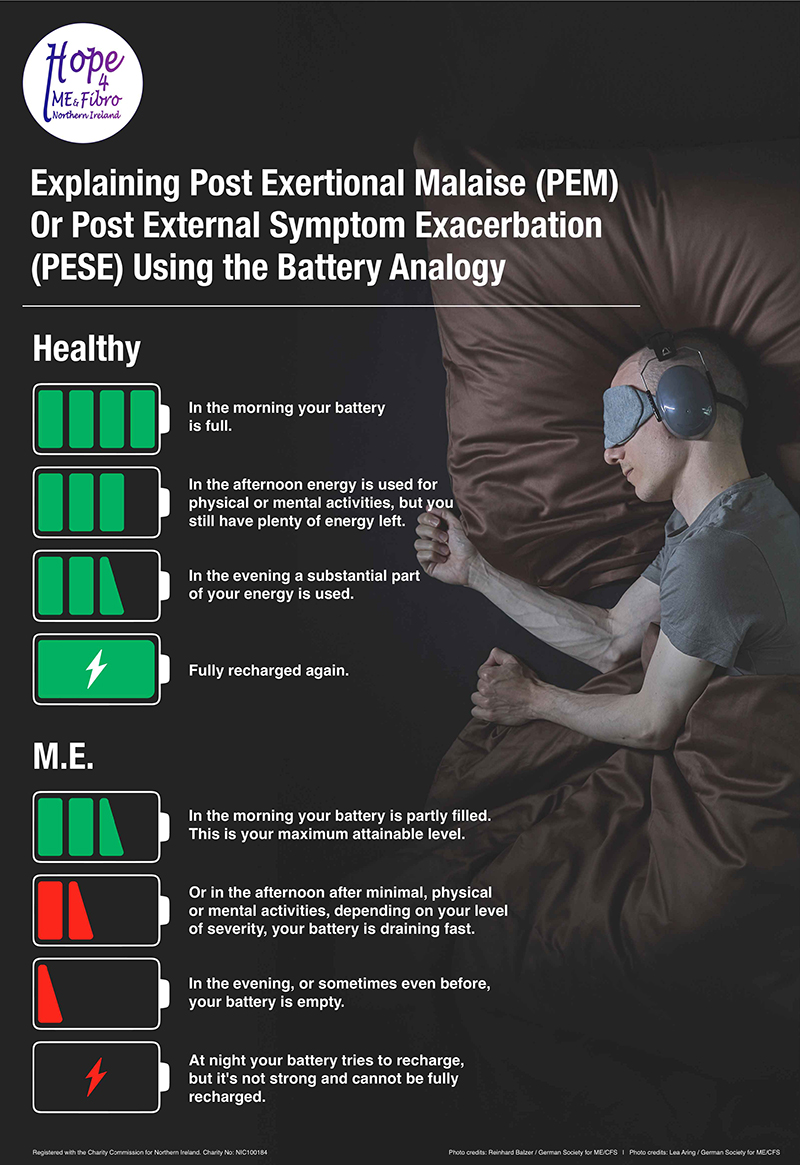
However, through specialist support and the careful management of symptoms, these can be stabilised and improve with time. In addition, achieving effective energy and activity management, to prevent flare-ups and relapses as a result of Post-exertional Malaise (PEM), is vital to achieve and maintain, some quality of life. Globally ME/CFS research is ongoing; it is hoped that this will lead to a better understanding, and the development of preventative measures and treatments.
Energy Management
It is vitally important for anyone who has ME/CFS, to understand the benefits and risks of managing their energy and activities, and planning how to do it.
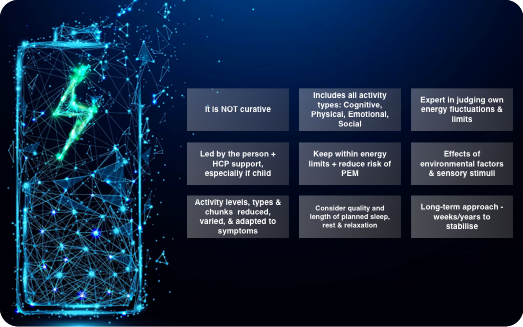
By setting an individual activity pattern within the persons current energy limits, symptoms can be minimised. Ideally, this should be done with the support of others – family, carers, friends and healthcare professionals (HCP), who can help the person to establish realistic expectations and meaningful personal goals.
Energy Management Planning in ME/CFS
Additional Important Considerations
-
Periodically review and agree the energy management plan (with support).
-
Be aware of how to manage flare-ups and relapses – as both can occur even when symptoms are well managed.
-
Tools can be used to aid the self-monitoring of activities such as: activity trackers and apps, phone (or other) heart-rate monitors, or diaries.
What Do People with ME/CFS Need?
-
Compassionate care and support to manage energy
-
Mobility aids
-
Regular medical review with a doctor
-
Some will need full-time care
Very severe ME/CFS:
-
Need help with personal hygiene and eating
-
Awareness of extreme sensory stimuli sensitivity.
-
Those unable to swallow, may need tube fed.
Other Forms of Support for People with ME/CFS
Points of contact – when support needed E.g. social care, financial, benefits
Support to manage daily activities – family, caring roles, education, interests & employment
Sources of advice & support –support groups, online forums, disability sites, apps.
Support to manage symptoms – medication, energy management, rest, priorities & meaningful activity
Multi-disciplinary rehabilitation –appropriate, safe & monitored
Additional Support for Vulnerable Groups, Children, Young People and those with Severe/Very Severe ME/CFS
Additional support from social services may be required for ‘vulnerable groups’ such as – the elderly, or those with complex physical or mental health needs.
Referral to a specialist Paediatrician should be made for children and young people (under 18), when ME/CFS is suspected as per ‘NICE ME/CFS Guideline 2021’.
Children and young people with ME/CFS, should have their care and support reviewed at least every 6 months, or more frequently as necessary, and depending on how severe and complex their symptoms are.
Those with Severe ME/CFS, often experience difficulty in accessing health services and in voicing their needs, both in the community and hospital settings.
Engaging the support of a sympathetic GP from the beginning, can go a long way to alleviating many of these issues, however this is not as easy as it should be.
The Overlap In Symptoms Of M.E. And Fibromyalgia
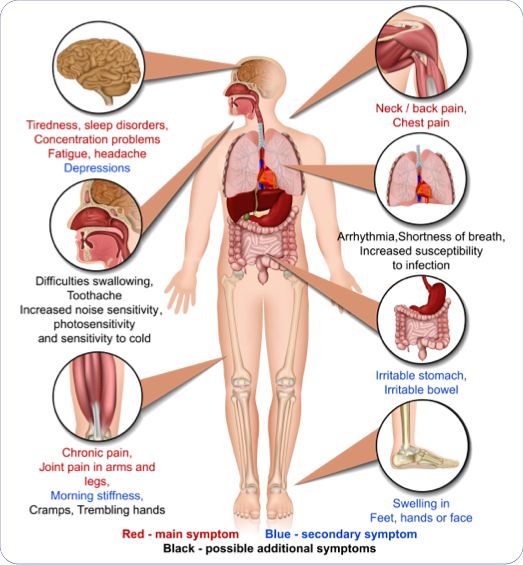
ME/CFS Symptoms
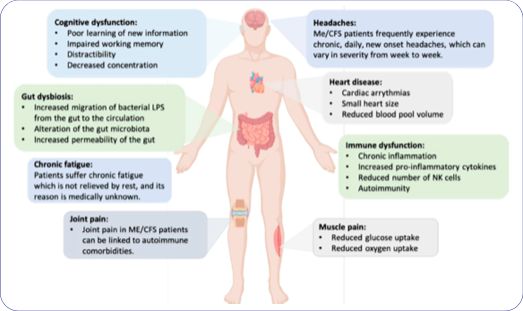
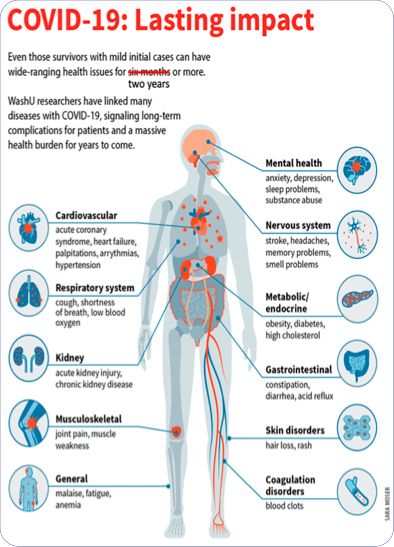
M.E. And Long Covid Overlap
Did you know?
-
Globally - 65 million people are estimated to have Long Covid
-
50% approx. of those with Long Covid have M.E.-like symptoms
-
England & Scotland – approx. 2million (ONS March’24)
-
USA – approx. 17.6 million adults (CDC March’24)
Links to Additional Resources and Support on ME/CFS
World ME Alliance ME Research UK ME Association Action For ME
Invest in ME Bateman Horne Centre Tymes Trust 25% ME Group
There For ME Workwell Foundation Open Medicine Foundation
Information provided by Linda Campbell, Medical Professional Education Advisor at the charity. Content design by Colin Cranney - Brand • Design • Consult
 You can also download and print our brochure here

 On Facebook
 On X
On X On Instagram


