

Karen Calder
Karen Calder
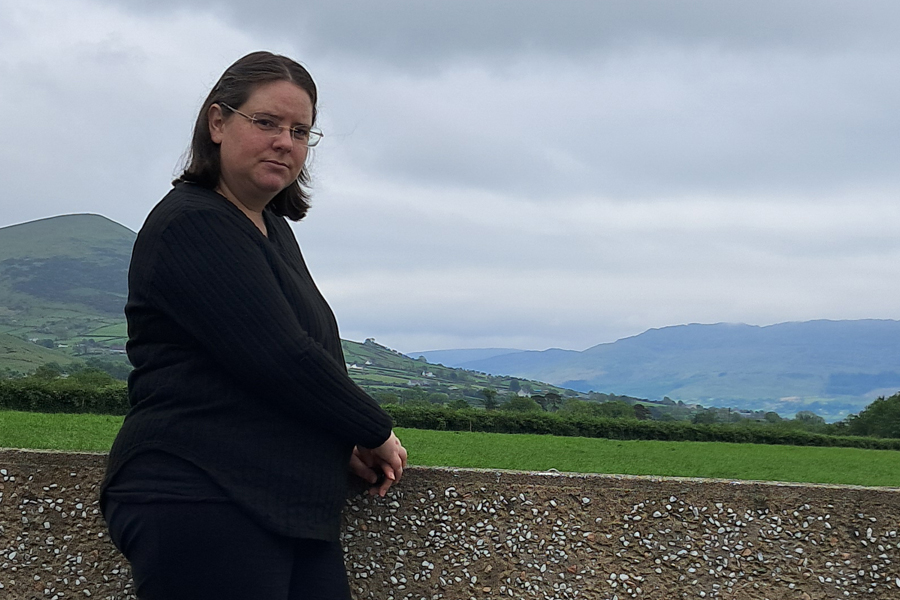
The Battle To Get A Diagnosis Of Fibromyalgia Despite Life Of Agony
The nightmare of fibromyalgia has been made worse for Kilkeel woman, Karen Calder, by being doubted about the pain and symptoms by a series of medical professionals.
The 37-year-old has had the condition for more than a decade, and the simplest of tasks leave her exhausted. Her first symptoms included lower back pain, neck pain, fatigue, lack of concentration and painful skin to touch.
Karen explained how the attitude of doctors made her feel.
I felt worthless and useless,” she said. “I was in constant pain and wasn't being listened to.A doctor said to my face, ‘You just want a diagnosis’. Well, yes, because then I can figure out how to live with what is wrong with me.
There has to be something wrong if I'm in this much pain. I felt like I was talking to a wall at every GP appointment with multiple GPs.”
The former care assistant and solicitor’s receptionist said she felt in a constant battle to receive a diagnosis.
“My journey was long and hard. First to be listened to. To be taken seriously. To be given help and/or treatment.
“Instead, I was told I'm too young to have these issues and I had to literally beg to be referred to a rheumatologist. She then diagnosed me and sent me back to my GP because I don't have a rheumatoid issue.
“I then asked the doctor to send me to a pain clinic only to be told at the pain clinic years later that they can't help me and they wouldn't refer me for management classes because I have a personality disorder and might ‘disrupt the class’.”
Karen said that she faced continual dismissal of her condition.
“There were uneducated professionals who told me to ‘buy this book about living with chronic pain’, I could have written the book,’ she explained. “After the diagnosis, I asked the doctor for help and he said, ‘there's nothing we can do, you're too young for pain medication. By the time you're in your 60s, pain meds won't work’.
“I told him I wouldn't make it to my 60s because I can't live with this pain. He sent me away. I was then given co-codamol by a GP who was desperate to help me.
“When those didn't work, I was told I had an addiction and sent to an addiction clinic. I do not have an addiction. So even after the diagnosis, I have been given the label of an addict which has affected my driving licence and still no pain management other than what I've learnt to do for myself which isn't much.”
Her life of pain was in stark contrast to the life Karen had.
“Before I became ill I felt like my life was great, I was fit and healthy and I was thinner. I was more mobile and able to be active. Things like being able to do the dishes, stand in a queue, make dinner, go for a walk, exercise and play with my nephews were all normal for me. Now, it's very different, all these things that I used to take for granted are so much harder.
“Living with this is debilitating. People don't understand and think I'm just fat and lazy.
“Having fibro is like a nightmare I can't wake from. Every day is pain. My pain levels are always high or higher. Never gone. It's like someone is rubbing my skin with sandpaper, puncturing my back and body with a jackhammer and constantly mixing my brain up so it feels like I'm losing my mind.”
On her best days, Karen can visit her nephews, but cannot play games with them.
“I can do some hoovering or change the bed on my best days, but not both,” she said. “My worst days are spent on the sofa crying. I can’t leave the house, I can't stand to cook for myself but I also can't leave to go and get food.
“They are black days that can last more than one day.
“I have to alternate between sitting on the sofa or standing up, or perching on a stool to get comfortable as my back hurts so much it is difficult to sit.”
Like many with the condition, Karen has developed her coping strategies.
“I make sure I have everything planned including knowing where bathrooms are, knowing where I can stop on the way if I need a rest,” she explained. “I use a Tens machine and hot water bottle.
“I also use CBD balm which is a topical balm for pain. I also use medical marijuana, THC to help me sleep and CBD for pain but this can be expensive and isn't affordable all the time. Other than this I meditate when I can and do Tai Chi.”
While Karen said her sister tries to teach her young children to be gentle, they are too young to really understand. She also said people don’t understand the struggles she faces.
“Trying to tell someone what it's like is almost impossible and they think I'm exaggerating,” she said. “I tell them to imagine being hungover as well as having the flu at the same time.
“I wish people knew it was real and not a made-up thing that's in your head. That it isn't just an illness that comes and goes but is there all the time.”
The former resident of East Belfast said that medical professionals and politicians can do much more for people with fibromyalgia and ME.
“There must be a better understanding of how it affects people daily and how to better treat it instead of being told to deal with it alone or join a support group,” she explained. “There needs to be better research into treatment and knowledge of the conditions. Also, better resources to aid those who have it, have just been diagnosed and those who now know they have a lifelong condition.”
And, Karen said the challenges are among the things others take for granted.
“Having a shower is one of those challenges,” she said. “I have to sit down and can't hold my hands above my head for long to wash my hair.
“When making tea, my hands are sore, and I can't open a carton of milk. I need help changing my bed now and can't do this on my own. I either have a shower or change the bed, I can’t do both on the same day.”
Karen said she has a simple message for professionals.
“Don't make us feel like we are stupid,” she explained. “We know our body, so when something is different and we notice, we tell a medical professional our symptoms only to be fobbed off with excuses as to what it could be, rather than sending a patient for tests to figure out what is really happening.”
If you or someone you know is suffering from or needs more information on Fibromyalgia and Chronic Fatigue Contact us

 On Facebook
 On X
On X On Instagram


