

Diane Corrigan
Diane Corrigan
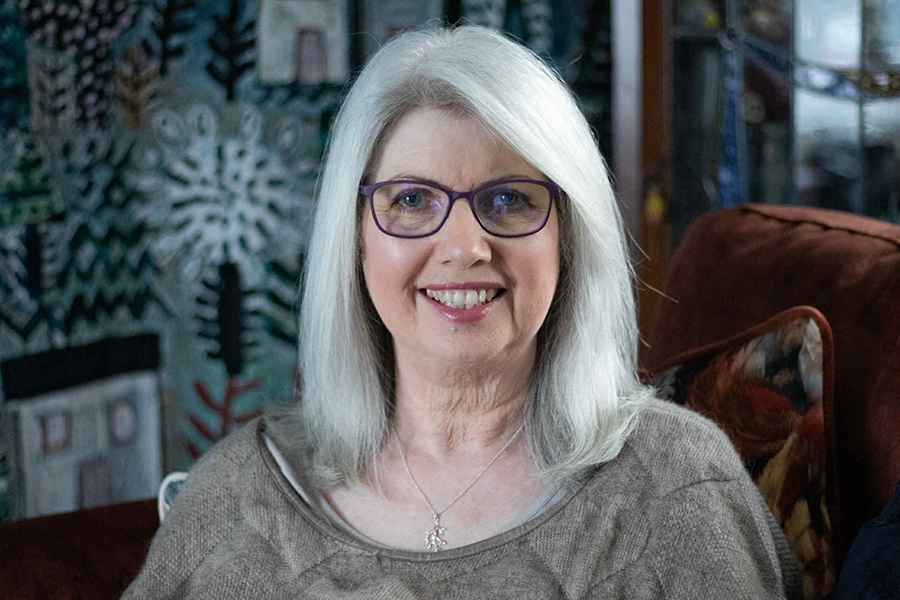
From Horseback to Homebound - Diane Corrigans Journey With Fibromyalgia and M.E.
At age 38, Diane Corrigan who is now 61, didn’t expect a horse riding accident to be the start of her chronic pain journey.
Following the incident in 2000, the County Down woman found herself with severe muscular pain all over her body, chronic migraines and vertigo. It took 8 years before she was officially diagnosed by a Rheumatologist with Fibromyalgia in 2008.
Fibromyalgia is a condition characterised by widespread musculoskeletal pain coupled with symptoms such as fatigue, sleep disturbances, memory difficulty and fluctuating mood. It’s thought to heighten painful sensations by altering the processing of signals in both the brain and spinal cord.
As years went by, so did numerous attempts and trials of pain relief before Diane finally found a combination of treatments that brought back a semblance of quality of life.
“I started by using a rollator but eventually became more dependent on a wheelchair, which had to be pushed by a family member as I couldn’t self propel.
“But I was still able to socialise, do activities and travel. I had adapted to my new way of living life, and I was committed to living it to the fullest.”
For Diane, however, this was short lived as in 2018 she was diagnosed with Myalgic Encephalomyelitis (M.E.).
“Everything changed drastically from 2018. Even though I wasn’t diagnosed until then, I was experiencing symptoms from early 2016.
“I was having breathlessness, air hunger and fatigue. I started having reactions and sensitivity to foods and personal care products, which I’d never had before, insomnia, and body and facial flushing that would start in the early hours of the morning. Strangely, I'd also become unable to sweat!
“It initially began as pain in my legs and as the weeks went on I was barely able to function. It was just constant malaise. That’s when I sought help from my GP because I was aware that leg pain was a side effect of an antibiotic I’d received on a cruise ship holiday. Initially, the GP didn’t think the two were connected.”
Not long after her initial trip to the GP, Diane started to experience internal vibrations in her chest, a high heart rate palpitations and angina type pain followed by an onslaught of increased symptoms.
“I felt like a bomb had gone off in my body.
“It was as if I had the flu - my body was in pain, my throat and lymph glands were swollen, I had a low body temperature, dizziness, orthostatic intolerance, nausea, severe migraines and brain fog. Plus occasional paralysis and neuropathy.
“Obviously feeling this way constantly with no answers was an incredibly stressful time, which only worsened the symptoms I was experiencing.”
The 61-year-old detailed how the charity Hope 4 ME was fundamental in receiving her M.E. diagnosis.
“I was aware of Hope 4 ME because of having fibromyalgia and being on the committee for the charity Fibromyalgia Support North Down & Ards. Hope 4 ME arranged an appointment with an immunology consultant who then diagnosed me with M.E. because all of my symptoms met the criteria.
“My GP then referred me to a consultant in chemical pathology who also had knowledge of M.E, because the GP now believed my symptoms pertained to the antibiotic I had been prescribed on the cruise ship.
“Months later it was an orthopaedic consultant who had experience in fluoroquinolone toxicity - which is essentially damage caused by Fluoroquinolone antibiotics. He explained that M.E. was just one of multiple disorders I was now experiencing which had been triggered by the antibiotic. That consultant diagnosed me with Fluoroquinolone Associated Disability”
Throughout her time managing her conditions, Diane highlights the importance of research and self-advocacy. She calls on both medical professionals and politicians to realise the need for better funding and understanding of these conditions.
“I’m very tenacious when it comes to advocating for myself and my conditions, and make sure I’m well prepared for any appointments. I provide medical professionals with as much evidence, research, books and leaflets on my conditions as I can when I feel the need.
“A big challenge I’ve found is the risk of infection when going to hospital appointments or when in emergency situations that call for a trip to A&E, but unfortunately the understanding isn’t really there.
“I can do everything on my end - vaccinations, protective sprays, air purifiers and face coverings - but it still doesn’t instil confidence because, in reality, it should be them protecting us.
“There is a greater need for medical professionals to see us, listen to us, and believe us. As for politicians, we desperately need funding for research because currently there is very little knowledge of M.E and no cure.
“It’s so important for people not only to realise, but remember, that M.E. is a real neurological and physiological condition. It is not psychological. It is not all in the mind, even though that’s how the ill informed often portrays it.
“Do not worsen our condition by ignorance.”
Myalgic Encephalomyelitis (M.E.) is a chronic neurological disease that affects multiple systems within the body, especially the nervous and immune system. While it consists of a variety of interchangeable symptoms, it is often characterised by extreme physical and mental exhaustion and poor cognition.
“My body does not produce energy to do even simple, everyday things.
“For most people when they sleep, their body recharges - mine does not.
“The mitochondria, which are the body’s energy cells, don't function correctly - they don’t work as they should. My battery is always low so I’ve massive limitations on what I can use my energy on throughout the day, so I try to conserve it for basic living tasks.
“If I go over my limit by using adrenaline I get massive payback, I then experience Post Exertional Malaise (PEM), which can worsen the condition - this can happen even with carefully pacing myself throughout the day.”
While Diane found adjusting to her body’s needs manageable with her fibromyalgia diagnosis, M.E. brought about a series of new challenges and impacts - especially when it came to her social life.
“I’ve become totally dependent on carers, my husband, daughter and her fiancé, as well as different equipment, aids and adaptations.
“When it comes to trying to explain how I feel on a daily basis, it’s extremely difficult. Many are empathetic but don’t grasp the entirety of my situation - I’ve actually lost some people whom I once held very near and dear, which has been truly heartbreaking.
“M.E. is a truly devastating condition. It’s completely life altering and can change your life in ways you never would have thought possible.
“One becomes isolated from society. There’s tremendous loss in every aspect of life.
“We become the missing, the forgotten.”

 On Facebook
 On X
On X On Instagram


