

David Campbell
David Campbell
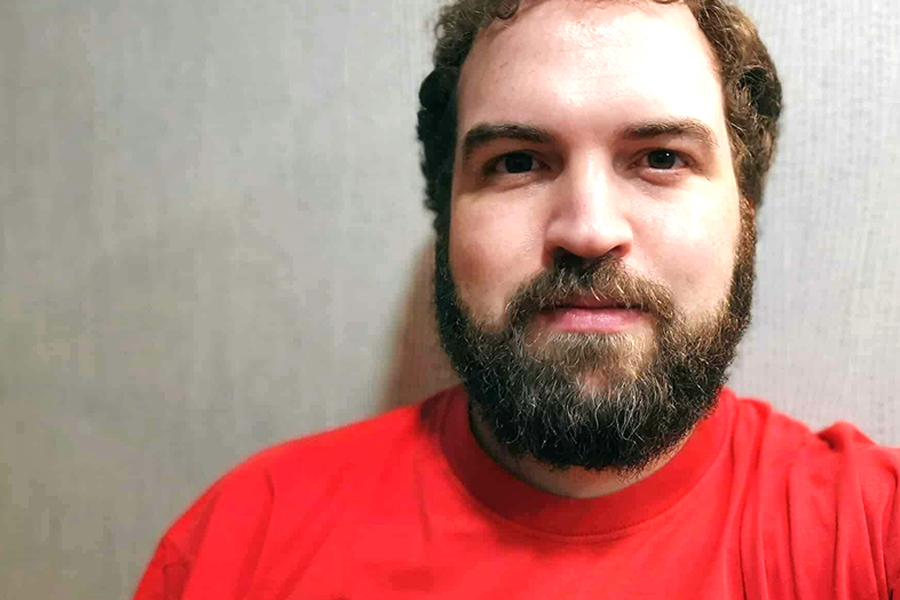
Lisburn Man David Campbell's Fifteen-Year Struggle Highlights M.E. Challenges in Northern Ireland
For Lisburn man, David Campbell, the thousands of people who have M.E. in Northern Ireland are being let down by politicians and the Department of Health failing to address the needs of all those with the condition.
Myalgic Encephalomyelitis, also called Chronic Fatigue Syndrome or M.E./CFS, is a condition that causes extreme tiredness and a range of other symptoms.
The 35-year-old has had M.E. for 15 years and has had a mixed experience of the medical attitudes, which he believes have to change.
“Currently there are no specialist services for M.E. in NI, and little to no education on it or research into it,” David explained.
“There is little will to change that, from those in decision-making positions - either those attitudes need to change, or the people in those positions need to.”
David is speaking out as part of the Discover ME campaign organised by charity Hope 4 ME & Fibro NI, as part of an ongoing initiative to raise awareness for the medical conditions M.E., Fibromyalgia, Long Covid and other post-viral syndromes – all bearing similar symptoms.
The campaign, designed to deepen public and professional understanding of chronic conditions like M.E., will begin on World ME Day where significant landmarks such as Parliament Buildings at Stormont and various council buildings are to be lit up in blue to symbolise solidarity and support for those affected by M.E., Fibromyalgia and Long Covid.
Having teamed up with Libraries NI, the campaign will then tour 13 libraries across Northern Ireland giving the public, politicians, educators and healthcare professionals the chance to experience the powerful Discover ME film in Virtual Reality (VR).
It is estimated that around 7,500 people in Northern Ireland have M.E. and roughly 30,000 have Long Covid with M.E.-like symptoms.
All of those people are being let down and discriminated against by the current system, many like myself for well over a decade,” said David.
For David the symptoms appeared when he was in his second year of university, studying psychology at the University of Glasgow.
I was in my second year of university, I was socially and physically active, I cycled, did martial arts, climbed mountains, was involved in various societies, I was leading a decent, fulfilling life,” he said.
After returning from Israel and Palestine, as part of a cross-border activist visit, I was just wiped out. That continued for several months; I began struggling with my university studies or maintaining any kind of social life, and I eventually had to withdraw and move home with my parents.
My symptoms were mainly fatigue, insomnia and disturbed sleep, poor concentration and memory - a bad mix for a student. It was about six months before I was given a diagnosis of post-viral fatigue syndrome, which eventually became a diagnosis of chronic fatigue syndrome and then M.E..”
David has experienced a mixture of attitudes from medical professionals.
“My GP was supportive, although admitted they did not know much about M.E.,” he explained.
“I have had a mix of luck when it comes to specialists, with some being willing to try new medications and therapies, while others would just refuse to accept that M.E. was a real condition, and just defaulted to harmful recommendations of exercise and 'pushing through'.”
The Lisburn man believes there is a lot of confusion about what the condition exactly is.
“Many people think M.E. is just 'being tired' (the name 'chronic fatigue syndrome' does not help with that misconception),” he explained. “Rather, it is a continuous paralysing exhaustion, that some may have gotten a taste of for only a few days while sick with Covid-19.
“M.E. can affect people differently; many will have disturbed and unrefreshing sleep, insomnia and hypersomnia, cognitive dysfunction, muscle and joint pain and weakness, GI issues, temperature dysregulation, hyper-sensitivity to stimuli, and many other symptoms.”
However, David says the exhaustion extends beyond the expectations of others.
“The primary symptom that all people with M.E. have is post-exertional malaise (PEM), which is when your symptoms are made worse by too much physical or mental stress, potentially lasting for days or longer.
“So if a friend or family member sees you on a 'good day', they may not see or hear from you for several days after that, because you are in bed, wiped out from that exertion.
“Because of this, M.E. is often referred to as a 'hidden illness', as you only see us when we are well enough to be seen, which gives a false impression of just how ill we really are.”
On his best days with the condition, David said he can go for a coffee with a friend, or a quiet walk, but even that can result in spending the next day in bed.
When it is one of the bad days David is: “bedbound, in a dark quiet room, doing very little, or just sleeping for most of it.”
David has severe M.E., one of four severity categories: mild, moderate, severe, and very severe. Those with very severe M.E. can be permanently bedbound and unable to stand or walk, they can find light, sound and touch excruciating, can require tube feeding, and some have ultimately died as a result of their very severe M.E.
David said that the support and understanding of those close to him are very important.
“I get a great amount of support from my family, and thankfully I have a few very understanding and patient friends,” he explained.
“I cope thanks to their support, and I always try to plan activities with my M.E. in mind.
“If I know I have a doctor’s appointment, or if I want to see someone, I will make sure that in the days before I stay well rested, and that for the days after I have no other plans and can just rest. It can be difficult to resist the urge to try to do everything if you have a ‘good day’, and even more difficult not to feel guilty that you don’t do ‘enough’.”
However, David admits that the debilitating nature of M.E. and the misconceptions have affected his life so much.
“It is very difficult! M.E. has put strains on many relationships and ended others. M.E. robbed me of my education, of my 20s, and it’s doing its best to take my 30s as well,” David said.
He believes action from those in positions of power can come from understanding what people experience with M.E.
“There is an urgent need to fund the commissioning of long-term specialist services and biomedical research,” he said.
“In many cases, people with M.E. struggle with some of the most basic tasks, and this is poorly understood.”
David explained what that entails for him, and what he has lost.
“Reading and writing was a big one for me to lose,” he said, adding: “I used to enjoy reading and was a second year university student, so to have that suddenly taken away from me, for me to only be able to read a few paragraphs at a time, was life-altering.
“Dictation and text-to-speech software can be a great help, but even then, there is still a level of concentration involved which often isn't possible.
“Similarly, things like cooking are difficult to impossible for me, as you are trying to keep track of multiple things all at once. Even just trying to take a note while on a phone call can be difficult, as my mind finds it difficult to switch between the two tasks of listening and writing.”

 On Facebook
 On X
On X On Instagram


