

Amanda Blain
Amanda Blain
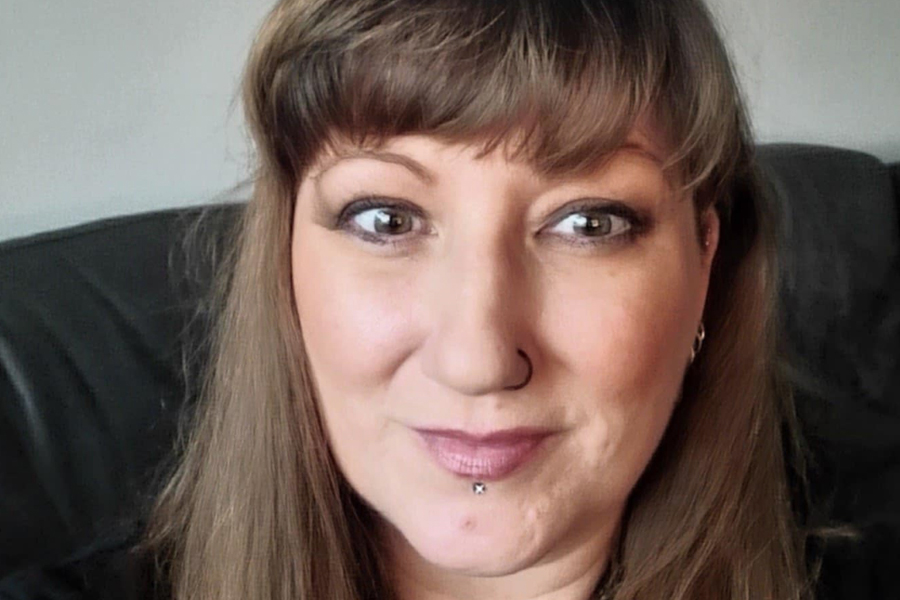
Amanda Blain: Finding Hope In Hardship
Amanda Blain, 47, was experiencing ongoing symptoms of Myalgic Encephalomyelitis (M.E.) for 15 years before receiving an official diagnosis in 2015, and a second diagnosis of Fibromyalgia just two years later.
With a lower capacity to expend energy and a consistently high heart rate, amongst other symptoms, Amanda was attributing it to her long shifts working in a hospital. Following what she, at the time, believed to be a nervous breakdown, came the M.E. diagnosis.
“It’s very easy to dismiss ongoing symptoms when you’re working 13.5 hour shifts, not eating properly because of swapping between day and night shifts, and simply getting older.
“I had numerous bouts of illness and mouth ulcers that needed steroids, I was checked for an underactive thyroid as well as various other issues, all with no abnormal results. It was a very stressful time.
“At first I told myself it was all because I was working intense shifts in an extremely busy ward, that I was too overweight, that I was imagining all these symptoms and that there was nothing wrong.
“I even changed jobs to a staff nurse post in a less acute setting to see if it would help ease the way I was feeling. And it did, but only for a short time.
“When my husband and I bought and moved into our first home, I thought I was having a nervous breakdown. After this, a GP who was already aware of M.E., was able to diagnose me with it.
“Once I started looking into M.E. and educating myself, it felt like such a relief. Every single way I was feeling was actually very real - I wasn’t a hypochondriac.”
Myalgic Encephalomyelitis (M.E.), also known as chronic fatigue syndrome, is a chronic neurological disease that affects multiple systems within the body, especially the nervous and immune system.
While it consists of a variety of symptoms, it is often characterised by extreme physical and mental exhaustion and poor cognition. On the days when the 47-year-old’s M.E. is at its worst, she finds herself bedbound and unable to eat or drink.
“A normal day in my body feels as if I’m wearing a concrete suit, wading through treacle with full blown flu symptoms. Every part of my body is affected.
“My worst day sees me unable to eat, drink and unable to get to the bathroom. If I need to go to the bathroom, my husband helps me. Sometimes I need to crawl next door to the bathroom. All my senses are extremely heightened; I can’t tolerate light, noise, touching or smelling things. Even breathing is exhausting on those days.
“On a good day though, I’m very aware that any of the energy I do use comes with a risk and often causes a crash.
“I’m so lucky to have such a supportive husband, and close family and friends who listen and want to be educated on what my illness means and how they can help me.”
While grappling with understanding her new diagnosis, the Hillsborough native often found herself battling the stigma attached to M.E. by other medical staff and people in her life.
“As a staff nurse, it’s easy to assume that I was aware of M.E, but I was told by senior medical staff that chronic fatigue was only diagnosed when they couldn’t find any other cause for the extreme tiredness. They also told me that Fibromyalgia was only diagnosed when they couldn’t find an answer for pain.
“It was only when I began to educate myself correctly after my diagnosis that I became confident in teaching my new knowledge to all the medical staff around me - but that didn’t stop them from rolling their eyes and telling me to exercise more or go out for more walks.
“I even tried to explain M.E. to my manager at the time who suggested joining their exercise classes twice a week. When I told her that one session alone would have me out sick for at least a month, she laughed at me.
“I ended up having to come out of work long term due to feeling that I had to keep pushing through my symptoms.
“The last nine years have shown me how few people actually understand M.E. If it wasn’t for Hope 4 ME teaching me to accept and adapt to my illness, and overcome my own gaslighting, I would have severe M.E.”
For those living with a chronic condition, Amanda emphasises the importance of research, resilience and support groups such as Hope 4 ME.
“I’m committed to holding onto as much independence as I can, but I’m also a very stubborn person which helps in some ways; it gives me the fight I need to try and maintain some form of ‘regular’ life.
“Learning how to accept how ill and disabled I’ve now become was the hardest thing I’ve ever had to do. I won’t let it stop me, but I do have to go about things differently. Pacing is essential for anyone with M.E., and it does take dedication to figure out what might be too much for my body.
“Disability aids are really needed, but it was difficult putting my pride aside and actually admitting that I needed them. It was heartbreaking. Then I see how much they really do help and that makes it so much easier to accept.
“I actually think the disability aids that I do use have shown my family and friends just how severe this disease really is.
“I try to find the positives in everything. Simple tasks now mean so much to me. Hope 4 ME’s crafting classes have become essential in finding brilliant hobbies that aren’t too intense. I've come to really enjoy painting.
“Painting has been a great distraction from pain and when I’m unable to do anything I can just think about my next piece of artwork while I’m lying down.
“Finding Hope 4 ME was my lifesaver. It’s introduced me to so many others who understand exactly what I’m going through and their support, empathy, advice and giggles have kept me sane. Even being able to share and exchange information through Facebook and Zoom meetings has been such a big help in articulating what I really go through on a daily basis.
“I met my best friend through Hope 4 ME and I can’t emphasise enough how important it is to have someone in your life who understands without having to go into teacher mode about M.E. and Fibromyalgia.
“Hope 4 ME and Fibro NI have been the biggest support in my M.E. journey. Without it, I don’t think I would be managing this disability and new way of living as well.
Throughout her journey with M.E. and fibromyalgia, Amanda became determined that there needs to be more research and understanding from medical professionals and a prioritisation of healthcare funding from politicians.
“There needs to be an awareness of symptoms amongst medical professionals and the recognition of M.E. as a standalone chronic condition.
“In most cases, it’s got to the point that the patients are educating their doctors on M.E. and what can be done to help us. There’s no education on pacing or energy conservation, and there is no signposting to where to find support. Most of the time we have to go to multiple medical professionals to get a single diagnosis.
“Even what might be classed as something smaller, like flexibility in types of appointments. It would be incredibly beneficial for appointments to be more readily available over the phone.
“The best thing a medical professional can do is to listen, empathise, believe us, and signpost us to where we can find more help.”
“Healthcare must be prioritised, and M.E. patients need to be factored into that prioritisation. We need the specialist care that was promised to us pre-Covid, and M.E. education should be incorporated into essential medical training.
“I would like both medical professionals and politicians to be aware that any energy we use fighting for our health care has a huge impact on our condition because we’re using the energy needed for other, more simple, daily tasks.
“M.E. has no cure. It has no actual curative treatment and there’s still a lot of mystery surrounding its main cause. Those thoughts alone are exhausting.”

 On Facebook
 On X
On X On Instagram


